


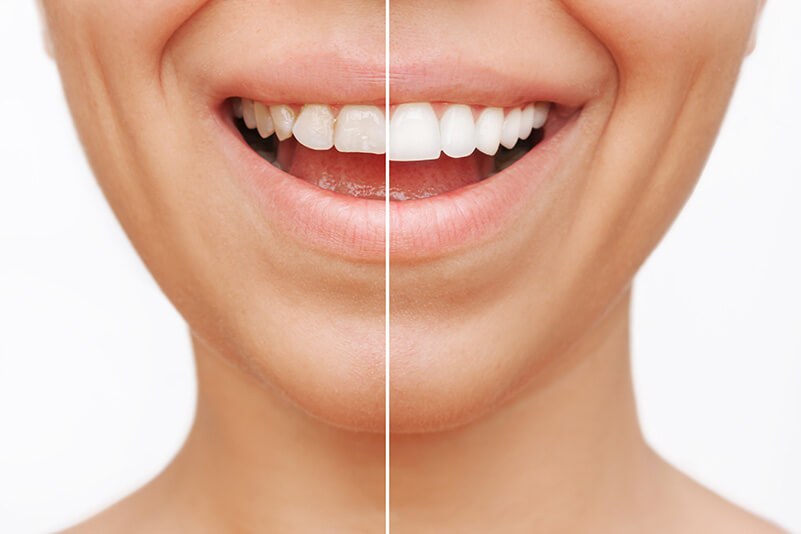
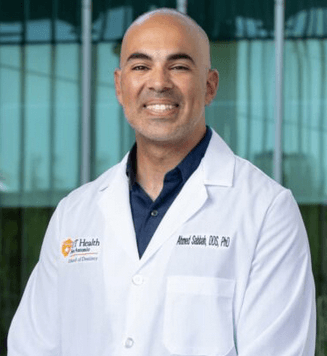
The term esthetic dentistry is often associated with bright, celebrity smiles. But according to Ahmed Sabbah, DDS, PhD, esthetic dentistry today is much more than cosmetic enhancements.
He said treatments restore confidence, improve function and ultimately protect the long-term oral health of his patients.
“At its core, esthetic dentistry focuses on recreating a patient’s smile in a way that looks natural and functions properly,” said Sabbah, director of UT Dentistry’s Advanced Education in General Dentistry (AEGD) Clinic. “Esthetics and function go hand in hand. You can’t have one without the other.”
Moving past myths
One of the most common misconceptions about esthetic dentistry is that it’s purely driven by vanity. In reality, Sabbah said many patients seek care because damaged, worn or missing teeth interfere with their daily life.
“Patients often come to us because they’re unable to chew comfortably, or they avoid smiling because their teeth are chipped or broken,” he said. “Rebuilding the smile restores both confidence and function.”
Another lingering myth is that esthetic treatments weaken natural teeth. That belief stems from outdated approaches that required removing significant tooth structure. Today’s philosophy is much different.
“We’ve moved away from subtractive dentistry,” Sabbah explained. “Modern esthetic dentistry is additive. We add material to restore what was lost, rather than cutting away healthy tooth structure.”
By preserving natural tooth structure, this approach protects long-term oral health while achieving authentic-looking results.
“We actually embrace natural imperfections,” Sabbah said. “Teeth shouldn’t look identical like piano keys. Small variations are what make a smile look real.”
Common esthetic options
Patients today have access to a wide range of esthetic services tailored to their needs, goals and oral health.
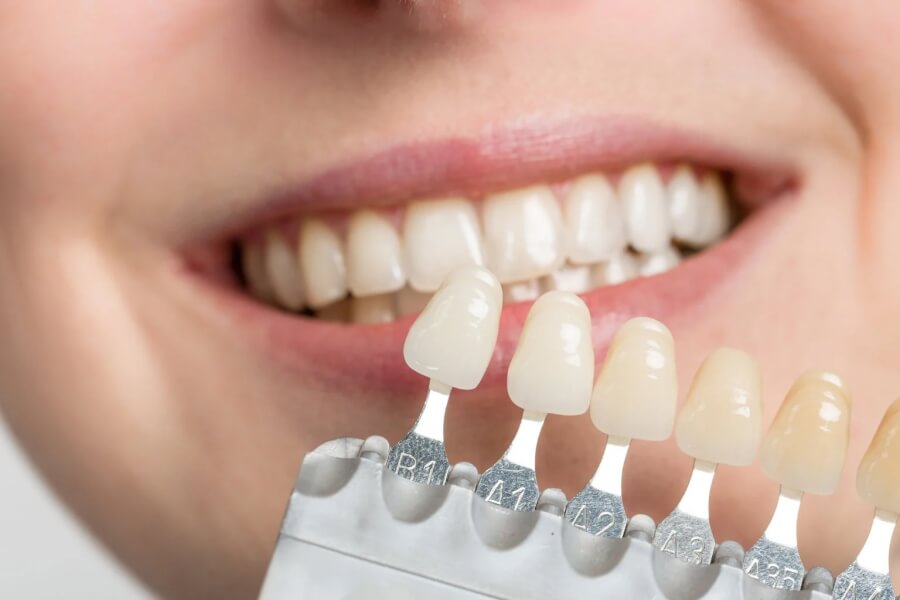 Veneers are among the most requested options, Sabbah said. Thin layers of porcelain are bonded to the front of teeth to improve shape, color or alignment while preserving a patient’s natural enamel. For patients with more extensive damage, crowns may be recommended to replace lost tooth structure and restore strength.
Dental implants are another key option for patients missing teeth. Using guided digital planning, implants are placed precisely in the bone and restored with crowns designed to mimic natural teeth in both function and appearance.
For patients seeking more conservative or lower-cost options, esthetic composite fillings can rebuild chipped or worn teeth with minimal intervention. Orthodontic treatment may also be recommended to reposition teeth before any restorative work begins.
“There’s no one-size-fits-all solution,” Sabbah said. “We work with each patient to find the option that fits their goals, comfort level and budget.”
Digital dentistry is changing everything
A defining feature of esthetic care at UT Dentistry is its use of advanced digital technology. Sabbah and his colleagues use intraoral scanners, facial imaging and 3D printing to create what he calls a “digital clone” of a patient.
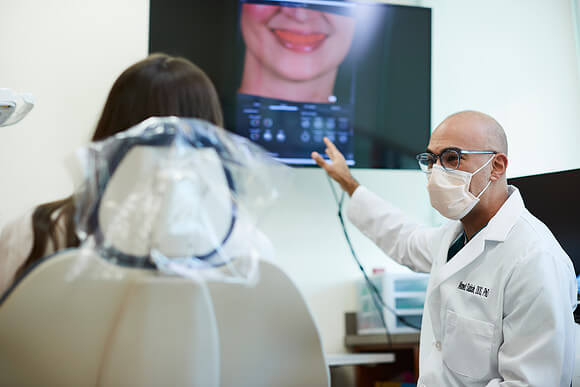 “We’re able to virtually design the final smile before we ever start treatment,” he said. “Patients can see the expected outcome on a screen and approve it before committing.”
This digital workflow allows clinicians to plan treatments with greater precision, reduce guesswork and minimize unnecessary tooth preparation. It also dramatically shortens treatment timelines.
“In some cases, we can place an implant and deliver a temporary tooth the same day,” Sabbah said. “What used to take months can now be completed in a fraction of the time.”
Guided procedures also improve safety and predictability, he said, which ensures implants and restorations are placed exactly where they should be for optimal function and longevity.
Care that’s more accessible
Esthetic dentistry services at UT Dentistry are provided through its resident and faculty clinics, including the AEGD clinic. Patients treated by residents, licensed dentists who are obtaining advanced training, receive care under close supervision from experienced faculty across multiple dental specialties.
“AEGD is an interdisciplinary clinic,” said Sabbah, who is also a clinical associate professor at the School of Dentistry. “Cases are reviewed from multiple perspectives — general dentistry, periodontics, prosthodontics — to ensure the highest level of care.”
Because it’s an academic setting, appointment times may be longer, but fees are typically less than that of private practice — making advanced esthetic care more accessible.
“We see patients of all ages and backgrounds, including those with complex medical histories,” Sabbah said. “What matters most for treatment success is motivation and follow-up. When patients are engaged in their care, the outcomes can be life-changing.”
Realistic expectations
Helping patients understand what’s possible — and what’s not — is a critical part of the treatment process. Digital planning plays a major role in managing expectations, according to Sabbah.
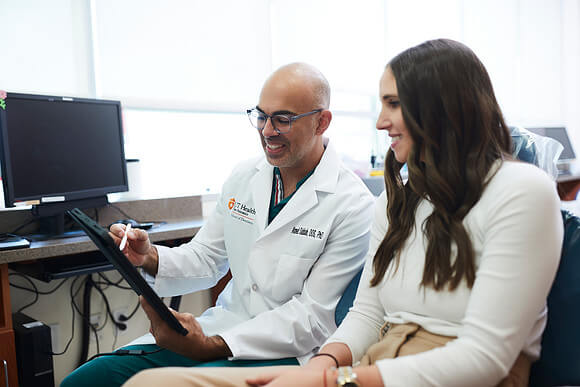 “Some patients come in asking for a ‘Hollywood smile,’ but it may not fit their face or function with their bite,” he said. “The technology allows us to show what’s achievable and have that conversation upfront.”
Ultimately, Sabbah said, esthetic dentistry is about balance — enhancing appearance while respecting a patient’s biology, the function of their mouth and their individuality.
“A great smile should look and feel like it belongs to you,” Sabbah said.
Learn more about UT Dentistry’s Advanced Education in General Dentistry Clinic by visiting their website or by calling 210-450-3270.